The Evolution of Authority Data Management Systems
Link equity is the ranking worth that streams from one webpage to another through hyperlinks. Also called "link juice," it discusses why backlinks move rankings - and why not all backlinks bring the very same weight. A link from a high-authority, topically appropriate page passes more equity than a link from a low-quality or off-topic website.
This guide breaks down how link equity works, what manages how much value a link transfers, and how to audit and increase it throughout your site. We construct links for a living at Rhino Rank, so this topic sits at the center of what we do.
Connect equity is the authority, trust, and ranking power that passes from one page to another through a hyperlink. When Page A links to Page B, a portion of Page A's collected value transfers to Page B. Online search engine treat that as a vote of self-confidence - a signal that Page B should have exposure.
Integrating Data Services Into Modern SEO Workflows
It appeared as SEO shorthand in the early 2000s and stuck since it describes the concept well: authority streams through links like liquid through pipelines. "Connect equity" is the cleaner term, and the one most SEO teams use nowsame mechanic. That mechanic traces back to Google's original PageRank algorithm, released by Larry Page and Sergey Brin in 1998.
A page with more links from high-scoring pages scored greater. That score influenced where the page appeared in search engine result. PageRank as a public metric is long gone - Google retired the toolbar score in 2016. The principle remained. Google still reads links as signals of trust, importance, and authority.
That worth shaping rankings is why link building choices can't be made on surface area metrics alone. A link from a DR 70 publication passes more equity than a link from a new blog site without any history. Positioning matters too. A link buried in a footer brings less weight than one placed in the body copy where users and spiders engage with it.
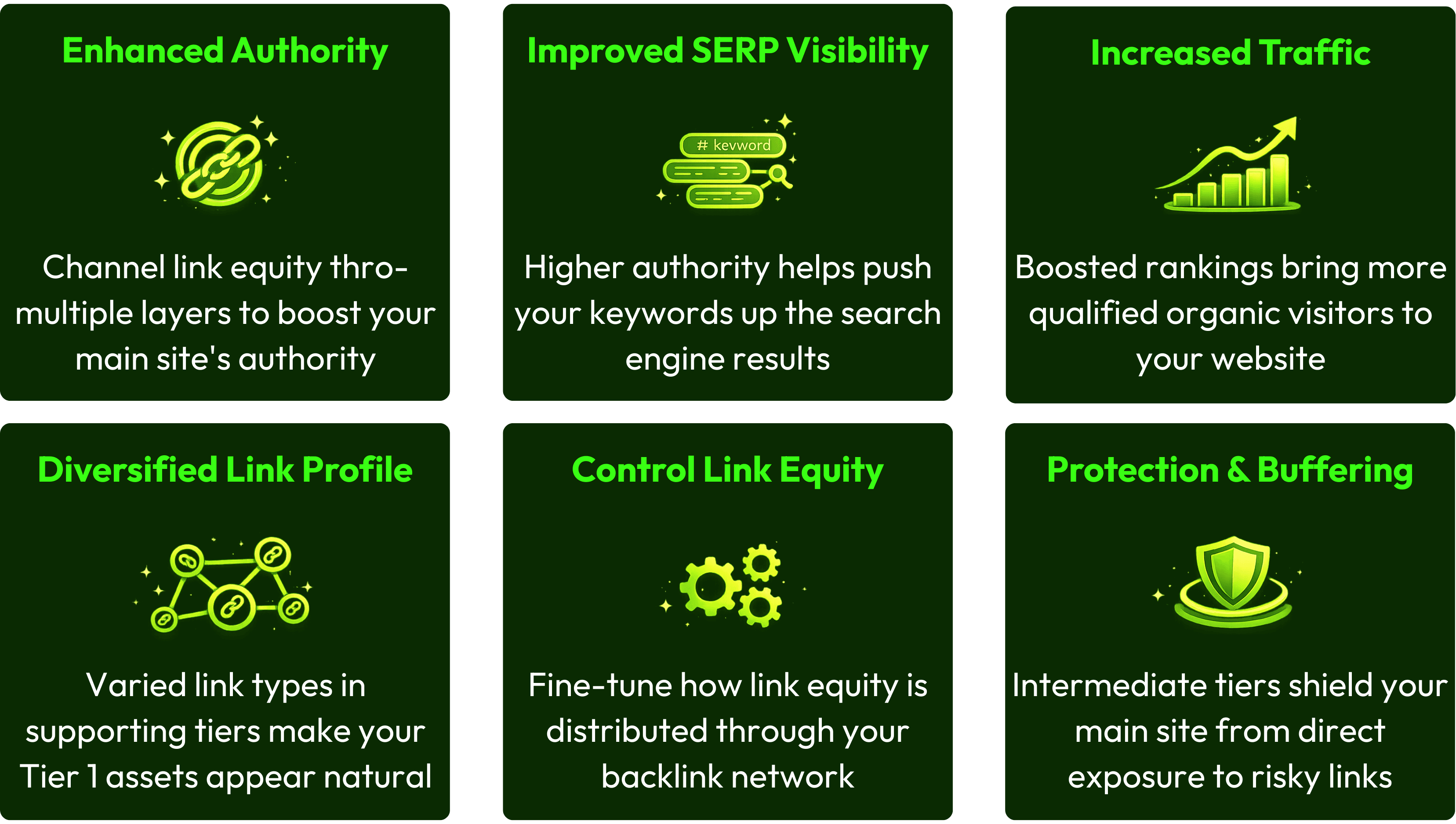
GSA SER 3 tier project
Every "quality" factor comes back to one thing: how much equity the link transfers. When one page links to another, it passes a portion of its own authority to the connected page.
Strategic Campaign Management for Large-Scale SEO Initiatives
A page doesn't give out the very same total up to every target without limitations - it divides what it can pass throughout its outbound links. If Page A has one outgoing link, many of its shareable equity can go to that single target. If Page A has 200 outbound links, each one gets a smaller slice.
And it's why a link from a resource page listing 300 websites provides less per-link worth than a link from a concentrated post with five or 6 outgoing links. Dilution changes how you need to price and prioritize chances. A guest post with 3 contextual outbound links passes more equity per link than a directory listing with hundreds.
These are 2 different equity flows, and they do various tasks. bring brand-new authority into your website from other domains. If an industry blog site links to your guide, you get a share of that website's made trust and authority. You can't produce this equity internally - it has to originate from outdoors.
GSA SER 3 tier projectLinks from the homepage to category pages, and from category pages to specific posts, push that equity through your website structure. We control these links completely, which is why internal linking stays one of the most disregarded SEO levers.
Merging Link Services Into Modern Ranking Workflows
External links bring equity in. Internal links decide where it lands. Build backlinks to your pillar content, then utilize internal links to push that equity towards your cash pages. Strong backlinks with weak internal connecting still squanders a lot of the worth those links bring. Equity doesn't constantly reach the page you desire.
inform online search engine not to follow a link and not to pass equity through it. Include rel="nofollow" and you close the pipe. Google also introduced rel="sponsored" and rel="ugc" in 2019 as more particular options, and it deals with all 3 as "hints" rather than rigorous regulations - but in practice, these links pass little or no equity.
If Googlebot can't crawl a page, it can't assess the links on that page or pass equity through them. No internal links point to them, so equity from your stronger pages never reaches them.